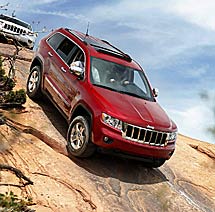
Delphi Automotive ha sido la encargada de desarrollar la primera aplicacin industrial de un fluido cuya viscosidad vara ante la presencia de un campo magntico y lo ha denominado MagneRide. An especially technologically interesting case of this comes when one uses a Halbach array instead of a single pole permanent magnet, as this almost doubles the field strength, which in turn almost doubles the strength of the eddy currents. The net effect is to more than triple the lift force.
With a multitude of new products waiting to be released, including several cars, I thought this might be a good time to revisit an old friend for. Oscillating electromagnetic fields edit A conductor can be levitated above an electromagnet (or vice versa) with an alternating current flowing through it. The Cadillac CTS-V uses magnetic suspension/magnetic ride control and has earned the respect of many for its ride comfort/handling compromise as much as its powerful engine. Magnetic force is used to counteract the effects of the gravitational acceleration and any other accelerations. 3 For example, the simplest example of lift with two simple dipole magnets repelling is highly unstable, since the top magnet can slide sideways, or flip over, and it turns out that no configuration of magnets can produce stability. Each of the four dampers are adjusted individually and independently even when it seems that all of them are doing the same thing. MagneRide is an automotive adaptive suspension with Magnetorheological damper system developed by the Delphi Automotive corporation 1 2 and now owned by Beijing. An especially technologically interesting case of this comes when one uses a Halbach array instead of a single pole permanent magnet, as this almost doubles the field strength, which in turn almost doubles the strength of the eddy currents.

However, several possibilities exist to make levitation viable, for example, the use of electronic stabilization or diamagnetic materials (since relative magnetic permeability is less than one 4 it can be shown that diamagnetic materials are stable along at least one. Damping of motion is done in a number of ways: external mechanical damping (in the support such as dashpots, air drag etc. At high frequencies (a few tens of kilohertz or so) and kilowatt powers small quantities of metals can be levitated and melted using levitation melting without the risk of the metal being contaminated by the crucible. MagneRide is an automotive adaptive suspension with Magnetorheological damper system developed by the Delphi Automotive corporation 1 2 and now owned by Beijing. SEGURO QUE TE INTERESA : Organizadores multimedia Suelos Comedor MS Almacenaje pequeo.
9 One source of oscillating magnetic field. An especially technologically interesting case of this comes when one uses a Halbach array instead of a single pole permanent magnet, as this almost doubles the field strength, which in turn almost doubles the strength of the eddy currents. Stable magnetic levitation can be achieved by measuring the position and speed of the object being levitated, and using a feedback loop which continuously adjusts one or more electromagnets to correct the object's motion, thus forming a servomechanism. Nuestras estanteras son ideales para colocar todo tipo de cosas, desde objetos bonitos que quieras exponer hasta productos bsicos que necesitas tener a mano. Suspension magnetica especifica para coches de Slot a escala 1/32 fabricados por Slot. it. Oportunidad en Suspension Magnetica - Accesorios para Autos!
Suspensin magnetica - Blog de coches y motor
The effect can be used for stunts such as levitating a telephone book by concealing an aluminium plate within it. Relevancia Nombre Precio Novedades Rango de precio - Estantes con espacio para todo. Magnetic fields are conservative forces and therefore in principle have no built-in damping, and in practice many of the levitation schemes are under-damped and in some cases negatively damped. Magnetic ride control uses a system known as magneto rheological technology for suspension damping. From Earnshaw's theorem at least one stable axis must be present for the system to levitate successfully, but the other axes can be stabilized using ferromagnetism.
This ensures a comfortable ride along various road surfaces. The two primary issues involved in magnetic levitation are lifting forces : providing an upward force sufficient to counteract gravity, and stability : ensuring that the system does not spontaneously slide or flip into a configuration where the lift is. Damping of motion is done in a number of ways: external mechanical damping (in the support such as dashpots, air drag etc. This article is about the physical phenomenon. Each absorber is filled with a polymer liquid containing many small magnetic particles. ECU can make variations within a few milliseconds resulting in the possibility of multiple damping variations being made in a second. Magnetic levitation is used for maglev trains, contactless melting, magnetic bearings and for product display purposes. However, several possibilities exist to make levitation viable, for example, the use of electronic stabilization or diamagnetic materials (since relative magnetic permeability is less than one 4 it can be shown that diamagnetic materials are stable along at least one. Either system represents examples of ElectroMagnetic Suspension (EMS). To calculate the amount of lift, a magnetic pressure can be defined.
Each absorber is filled with a polymer liquid containing many small magnetic particles. Such a simple system is not very robust; far more effective control systems exist, but this illustrates the basic idea. Conductors can have a relative permeability to alternating magnetic fields of below one, so some configurations using simple AC driven electromagnets are self stable. 1 Essentially all types of magnets have been used to generate lift for magnetic levitation; permanent magnets, electromagnets, ferromagnetism, diamagnetism, superconducting magnets and magnetism due to induced currents in conductors. If two magnets are mechanically constrained along a single axis, for example, and arranged to repel each other strongly, this will act to levitate one of the magnets above the other. Magnetic fields are conservative forces and therefore in principle have no built-in damping, and in practice many of the levitation schemes are under-damped and in some cases negatively damped.


Комментариев нет:
Отправить комментарий